Legged Robot Safety Standards: Buyer Guide
Legged robot safety standards start with machine stability, use and site. Learn where ISO/CD 25785-1 fits and what evidence to request.
Legged robot safety standards depend on how a machine stays upright, what it does and where it works. Buyers assessing a biped, quadruped or balancing wheeled robot should check ISO/CD 25785-1 first when active control maintains stability, then separate safety evidence from ISO 18646-5:2026 locomotion tests.[1][2]
ISO/CD 25785-1 is the new document to watch for industrial mobile robots that need active control to remain stable, but it is still a committee draft. Buyers and suppliers should not present it as a published International Standard.[1]
Which safety standard covers a legged robot?
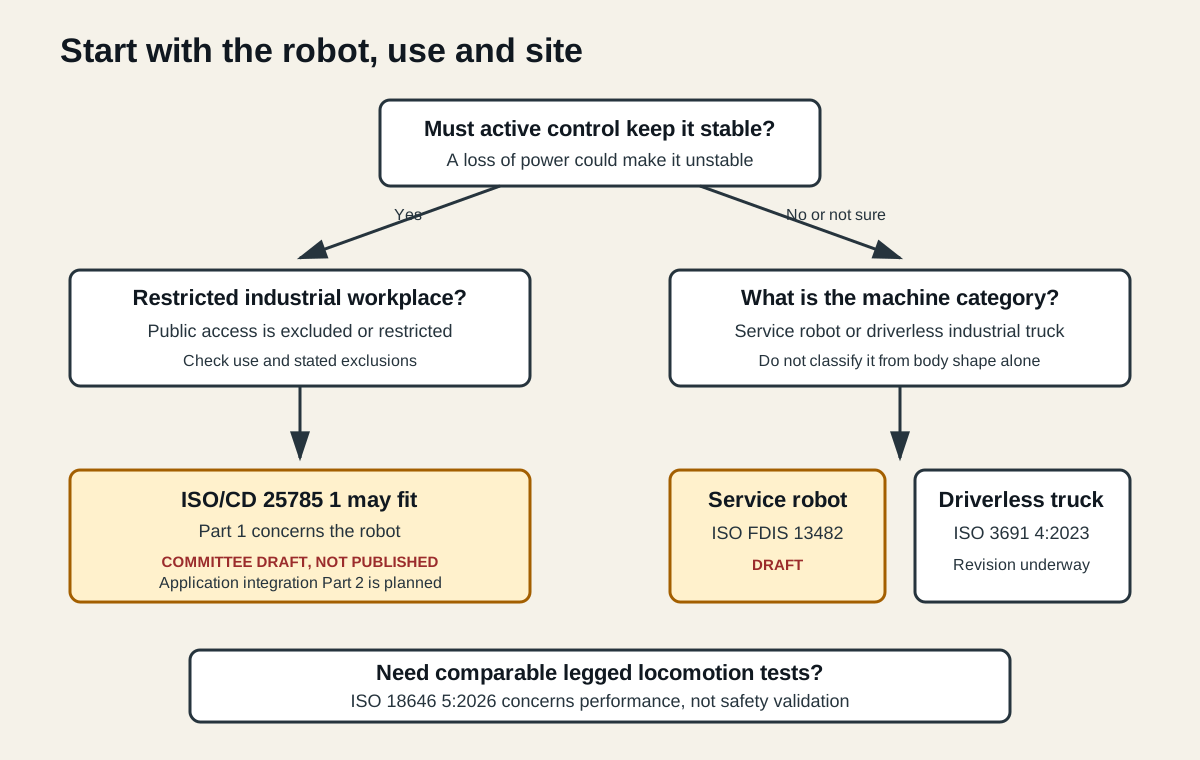
Start with ISO/CD 25785-1 only when the robot uses active control to remain stable and works in an industrial environment with restricted public access. The committee draft covers ground traveling industrial mobile robots, including quadrupeds, bipeds and balancing wheeled robots. Machines may also carry arms.[1]
How the document defines the machine matters more than the sales label. Active stability means the robot needs active control to remain balanced and could become unstable when power is absent. The stated industrial setting is a workplace that bars or restricts public access.[1]
This early scope check cannot decide whether a machine complies. ISO records the document at committee stage 30.60, after the comment period closed on July 8, 2026. The catalogue also says that a separate Part 2 will address how people integrate applications.[1]
How do safety standards differ from movement tests?
ISO 18646-5:2026 measures how well a legged robot moves; it does not validate safety. Buyers should use it for comparable movement results, then request a separate safety case, documented risk review and application records. A robot can pass a locomotion test without being safe for the proposed route or task.[2]
ISO says people can use the test methods to check a complete machine, test samples, qualify a machine or decide whether to accept it.[2]
That distinction should shape a tender. Ask for locomotion results when you need comparable evidence about movement. Ask separately for the safety case, the documented risk review and application records.
| Buyer question | Document to examine first | What the public ISO record supports | Status checked 2026-09-10 |
|---|---|---|---|
| Does the actively stable robot itself fit an emerging industrial safety scope? | ISO/CD 25785-1 | Robot safety scope for actively stable industrial mobile robots, including legged and balancing forms.[1] | Committee draft, stage 30.60.[1] |
| Can the supplier report legged locomotion performance using a published test framework? | ISO 18646-5:2026 | Methods for specifying and evaluating locomotion performance of legged service robots.[2] | Published July 2026.[2] |
| Is the machine a service robot used in a personal or professional setting? | ISO/FDIS 13482 | Safety scope for service robots, including physical contact and functional safety considerations.[3] | Final Draft International Standard, stage 50.00.[3] |
| Is it an automatically operating powered industrial truck and system? | ISO 3691-4:2023 | Safety requirements and verification for driverless industrial trucks and their systems.[4] | Published, with a replacement draft under development.[4] |
Which exclusions can change the standards review?
Check ISO/CD 25785-1 exclusions before citing it in a tender. Its public scope leaves out operator controlled travel, mechanically guided robots, wearable or rideable machines, road vehicles, air or water travel, floor cleaners and work outside restricted industrial environments. It also omits the operating conditions named below.[1]
The draft does not cover extreme climates, freezer use, explosive atmospheres, nuclear environments or certain hazardous loads. A buyer considering one of those conditions needs a wider standards and risk review and should not assume this draft settles the problem.[1]
Service use points elsewhere. ISO says ISO/FDIS 13482 applies to service robots in personal and professional or commercial applications. Its public scope excludes industrial and medical applications, and the document is still in the approval phase.[3]
Driverless industrial trucks have another route. ISO 3691-4:2023 applies to powered trucks designed to operate automatically and their systems. ISO lists the 2023 edition as published and also shows the draft that will replace it.[4]
A machine can carry more than one function, so this table cannot settle every case. A mobile base with an arm, load handling tool or public facing task may bring more standards and laws into the review. Record the actual setup and application instead of assigning every model level claim to every physical unit.
What should buyers request from a legged robot supplier?
Ask the supplier for dated records that distinguish the exact robot setup, its integrated application and its locomotion tests. Each bid should identify the model, software, tools, task, site, cited standard or draft, test conditions and responsible integrator. Brochure level model claims do not describe every deployed physical unit.
Request these records before comparing claims:
1. The robot model, software version, attached tools and power setup assessed. 2. The intended tasks, routes, surfaces, gradients and foreseeable misuse. 3. The standard number, edition or draft date, scope and exclusions relied upon. 4. Records showing how the supplier assessed the robot and the completed application separately. 5. Locomotion test methods, conditions and results, with failures and test limits preserved. 6. Stop, recovery and loss of power behavior for the proposed setup. 7. The party responsible for integrating and commissioning the system, controlling changes and keeping incident records.
Items six and seven are tender questions, not claims about the content of the four ISO documents cited here. Their purpose is to stop a buyer from accepting a model brochure as the safety file for a deployed application. For industrial arms, our cobot safety standards guide explains why the robot and completed application need separate records.
How should buyers compare bids while the draft changes?
Compare bids against a fixed evidence date and require suppliers to name the exact ISO/CD 25785-1 draft reviewed. If the committee document changes, ask for a written mapping of the changes before comparing claims. Apply the same version control to ISO/FDIS 13482 and ISO 3691-4:2023.[1][3][4]
ISO lists ISO/FDIS 13482 as an approval stage draft that will replace ISO 13482:2014. It lists ISO 3691-4:2023 as published and says a draft will replace it.[3][4]
Classify the machine by its real task and site. Our guide to humanoid robots in warehouses documents current deployments that remain tied to narrow jobs and controlled work areas.
Classify first, preserve version details and separate safety evidence from movement benchmarks. Then have a qualified safety professional determine the standards and laws that apply to the actual machine, application and jurisdiction.
This guide relies on public ISO catalogue summaries, not the licensed text of the standards. It cannot determine whether a robot or installed system is safe, compliant or legal.
Legged robot safety standards: common questions
What safety standard covers actively stable legged robots?
ISO is developing ISO/CD 25785-1 for actively stable industrial mobile robots, including quadrupeds and bipeds, in industrial environments with restricted public access. It remains a committee draft and is not a published International Standard.[1]
Does ISO 18646-5:2026 certify that a legged robot is safe?
No. ISO 18646-5:2026 provides methods for testing how well a legged robot moves. ISO's catalogue says the document does not validate safety, so buyers need separate safety and application evidence.[2]
Does ISO/CD 25785-1 cover every quadruped robot?
No. The draft has limits based on stability, use, environment and machine type. It excludes work outside industrial environments, wearable or rideable machines and road vehicles. Floor cleaning robots and machines that travel through air or water also sit outside its scope.[1]
What should a buyer request from a legged robot supplier?
Request the exact standard or dated draft, robot setup, software, attached tools, intended task, site conditions and test results. Keep the robot safety file, integrated application records and locomotion tests separate. Name the party that will integrate and commission the system.[1][2]
Sources
[1] ISO, "ISO/CD 25785-1, Robotics: Safety requirements for dynamically stable industrial mobile robots: Part 1: Robots." Committee draft catalogue record, stage 30.60. https://www.iso.org/standard/91469.html
[2] ISO catalogue record for ISO 18646-5:2026, concerning test methods for legged service robot locomotion. Published July 2026. https://www.iso.org/standard/86850.html
[3] ISO, "ISO/FDIS 13482, Robotics: Safety requirements for service robots." Final Draft International Standard catalogue record, stage 50.00. https://www.iso.org/standard/83498.html
[4] ISO catalogue record for ISO 3691-4:2023, concerning safety requirements for driverless industrial trucks and their systems. Published June 2023; ISO is developing a revision. https://www.iso.org/standard/83545.html
Sources
- https://www.iso.org/standard/91469.html
- https://www.iso.org/standard/86850.html
- https://www.iso.org/standard/83498.html
- https://www.iso.org/standard/83545.html